Day-and-Date Premieres Impact Box Office Revenue: 2026 Outlook
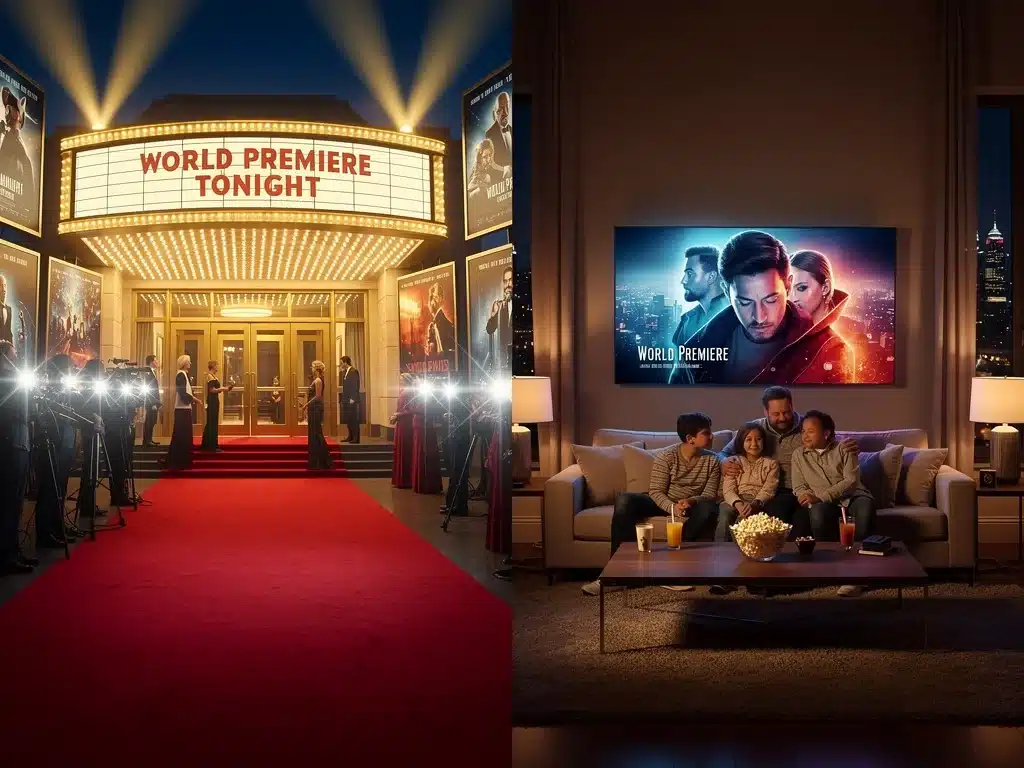
The industry report The Impact of Day-and-Date Premieres on Box Office Revenue: A 2026 Perspective analyzes the permanent shift toward hybrid film distribution.
This brief outlines how simultaneous theatrical and streaming releases disrupt traditional box office windows, explains the complex financial trade-offs for studios and exhibitors, and highlights the evolving audience habits that stakeholders must monitor next.
The Evolution of Day-and-Date Premieres
The concept of day-and-date premieres gained significant traction during the COVID-19 pandemic, when traditional cinema operations faced unprecedented closures.
Studios, seeking ways to release their completed films and recoup investments, turned to simultaneous streaming and theatrical releases.
What began as a temporary measure quickly revealed a new pathway for content distribution, challenging decades-old industry norms.
This rapid adaptation spurred both innovation and considerable debate within the film ecosystem.
By 2026, the initial experimental phase has solidified into a recognized, albeit controversial, release strategy.
The industry is now grappling with its long-term viability and the profound day-and-date premieres impact on established revenue streams.
Understanding the Financial Dynamics
The financial dynamics of day-and-date premieres are far from straightforward, presenting both opportunities and significant risks.
While this model can boost subscriber numbers for streaming services, it often comes at the expense of traditional box office performance.
Studios must now carefully weigh the potential for immediate digital revenue against the historical profitability of exclusive theatrical runs. The calculus involves intricate projections of audience behavior across different platforms.
This re-evaluation of revenue streams is central to understanding the day-and-date premieres impact on overall profitability. It’s a delicate balance between maximizing reach and optimizing financial returns in a fragmented market.
Box Office Erosion and Shifting Revenues
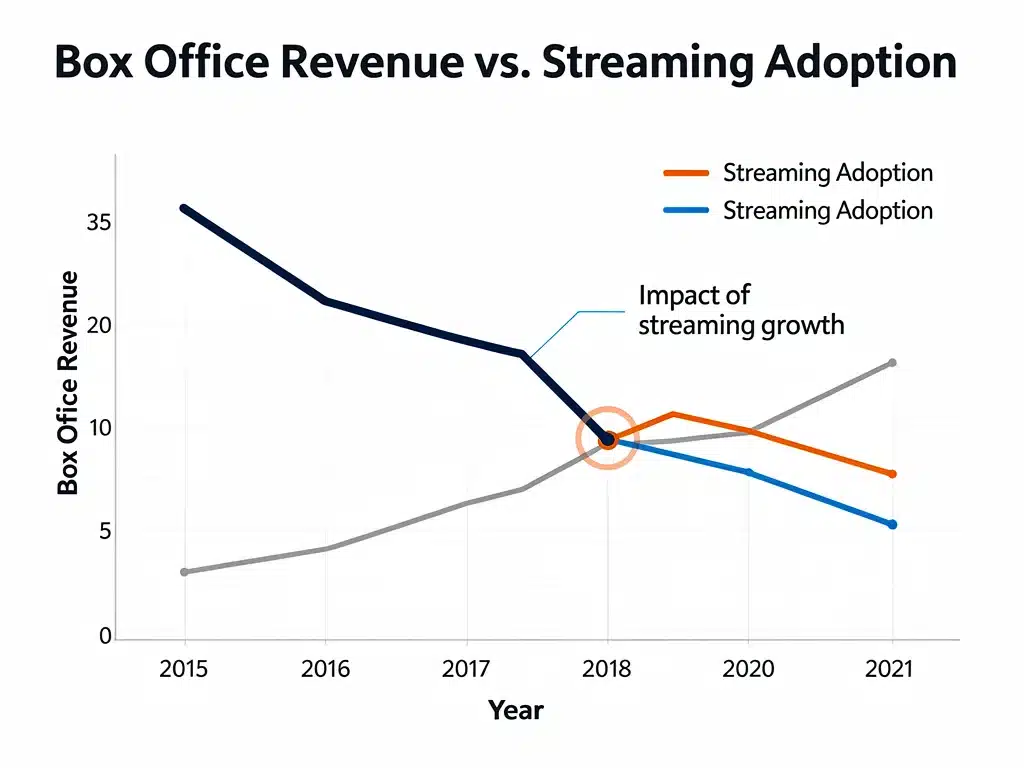
One of the most immediate and visible effects of day-and-date premieres is the erosion of traditional box office revenue.
When a film is available at home on the same day it hits theaters, a segment of the audience opts for convenience, bypassing the cinema experience.
This shift directly impacts exhibitors, who rely heavily on exclusive theatrical windows to drive ticket sales and concession revenue.
The reduced exclusivity period diminishes the incentive for many moviegoers to visit theaters during a film’s opening weekend.
Consequently, the financial pie is reallocated, with a larger slice going to streaming platforms and a smaller, potentially unsustainable, portion left for cinemas.
This trend highlights the critical day-and-date premieres impact on theatrical exhibition.
- Decreased opening weekend grosses for hybrid releases.
- Increased pressure on exhibitors to innovate and differentiate the cinema experience.
- Redistribution of revenue from ticket sales to streaming subscriptions.
Studio Strategies and Content Valuation in 2026
As 2026 unfolds, major studios are refining their strategies in response to the evolving distribution landscape.
The decision to pursue a day-and-date release is no longer a knee-jerk reaction but a carefully considered part of a film’s overall business plan.
This involves a complex evaluation of a film’s genre, target audience, and potential for streaming subscriber acquisition versus its theatrical appeal.
Content valuation has become more nuanced, incorporating metrics beyond simple box office numbers.
Studios are increasingly focused on the long-term value a film brings to their streaming ecosystems. This strategic pivot defines much of the day-and-date premieres impact on how movies are financed and marketed.
The Role of Streaming Subscriptions
For studios with proprietary streaming services, day-and-date releases serve a dual purpose: generating initial revenue and, crucially, driving subscriber growth and retention.
A highly anticipated film can act as a powerful lure for new subscribers.
The value proposition for consumers is clear: access to new releases from the comfort of their homes, often included in their existing subscription.
This convenience factor is a significant driver of streaming adoption and loyalty.
However, the cost of acquiring and retaining these subscribers must be weighed against the potential loss of theatrical revenue. This intricate balancing act underscores a key aspect of the day-and-date premieres impact.
- Direct correlation between tentpole releases and subscriber spikes.
- Increased pressure on streaming platforms to constantly deliver fresh, high-quality content.
- Long-term subscriber value versus short-term box office gains.
Exhibitor Challenges and Adaptations
Cinema exhibitors face an existential challenge from the widespread adoption of day-and-date premieres. Their traditional business model, built on exclusive theatrical windows, has been severely disrupted, forcing them to adapt or risk obsolescence.
Many exhibitors are now experimenting with new strategies to entice audiences back into theaters, focusing on premium experiences, enhanced amenities, and unique communal events.
The emphasis has shifted from simply showing films to offering an unparalleled outing.
The ongoing dialogue between studios and exhibitors revolves around finding a sustainable middle ground that respects both business models. This tension is a central component of the day-and-date premieres impact on the industry.
Innovative Cinema Experiences
To counteract the appeal of home viewing, cinemas are investing heavily in innovative experiences designed to differentiate themselves.
This includes state-of-the-art sound systems, immersive screen technologies, and luxurious seating options.
Beyond the technical upgrades, exhibitors are also exploring curated programming, special events, and enhanced food and beverage offerings.
The goal is to transform a simple movie viewing into a comprehensive entertainment destination.
These efforts are critical for cinemas to maintain relevance and demonstrate their unique value proposition in the face of streaming competition.
The industry’s capacity for innovation will determine the long-term day-and-date premieres impact on theatrical attendance.
Audience Behavior and Consumption Patterns
The rise of day-and-date premieres has profoundly altered audience behavior and consumption patterns. Consumers now have more choice and flexibility than ever before, dictating how and when they engage with new films.
This shift has accelerated the trend towards on-demand viewing, making immediate access a key expectation for many.
The convenience of streaming from home often outweighs the traditional theatrical experience for a significant demographic.
Understanding these evolving preferences is crucial for studios and distributors to effectively allocate resources and market their films. The day-and-date premieres impact is fundamentally about meeting audience demands.
Generational Divides in Viewing Preferences
A notable aspect of changing consumption patterns is the widening generational divide in viewing preferences. Younger audiences, accustomed to instant digital gratification, are often more inclined towards streaming premieres.
Older demographics, while also embracing streaming, may still hold a stronger affinity for the traditional cinema experience as a social outing. These differences necessitate tailored marketing and distribution strategies.
Ignoring these generational nuances can lead to missed opportunities or inefficient resource allocation. The successful navigation of the day-and-date premieres impact requires a deep understanding of varied audience segments.
The Future Landscape: 2026 and Beyond
Looking ahead to 2026, the future landscape of film distribution appears to be a hybrid model, balancing theatrical runs with strategic streaming releases.
Exclusive theatrical windows may shorten, but are unlikely to disappear entirely for tentpole films.
Studios will continue to experiment with staggered release strategies, optimizing for specific films and market conditions. The emphasis will be on maximizing overall revenue, considering both box office and streaming metrics.
Collaboration between studios and exhibitors will become increasingly vital to forge sustainable partnerships. The ongoing day-and-date premieres impact will necessitate flexibility and innovation from all stakeholders.

Emerging Business Models and Partnerships
New business models are emerging, including premium video-on-demand (PVOD) windows that allow early access to films for an additional fee, bridging the gap between theatrical and subscription streaming. This offers another layer of flexibility.
Partnerships between studios and independent cinemas, focusing on unique content or community engagement, could also become more prevalent. These collaborations can help preserve the cultural significance of the theatrical experience.
Ultimately, the industry’s ability to adapt and innovate will determine its resilience. The day-and-date premieres impact is not merely a challenge but an impetus for creative solutions and evolving industry structures.
Regulatory Considerations and Industry Standards
As the day-and-date model matures, regulatory considerations and the establishment of new industry standards become increasingly important.
The lack of standardized release windows can create uncertainty and friction between various stakeholders.
Discussions around fair revenue sharing, data transparency, and anti-competitive practices are gaining prominence. Industry bodies and governmental agencies may step in to mediate disputes and set guidelines.
The establishment of clear, mutually agreed-upon rules will be crucial for the long-term health of the film ecosystem. This regulatory evolution forms another facet of the day-and-date premieres impact.
The Battle for Exclusivity
The battle for exclusivity remains a contentious point, particularly for major blockbusters. Exhibitors argue that extensive exclusive theatrical runs are essential for their survival and for generating the buzz that benefits later streaming releases.
Studios, however, point to the benefits of immediate global reach and subscriber acquisition offered by day-and-date strategies. This fundamental disagreement continues to shape negotiations and industry policy.
Finding a compromise that satisfies both sides will require innovative thinking and a willingness to move beyond traditional paradigms. The resolution of this tension will significantly shape the future day-and-date premieres impact.
| Key Point | Brief Description |
|---|---|
| Box Office Erosion | Simultaneous releases divert audiences from theaters, impacting ticket sales. |
| Streaming Growth | Day-and-date strategy boosts subscriber numbers for studio-owned platforms. |
| Exhibitor Adaptation | Cinemas are innovating with premium experiences to attract audiences. |
| Hybrid Future | The industry is moving towards a balanced model of theatrical and streaming releases. |
Frequently Asked Questions About Day-and-Date Premieres
A day-and-date premiere refers to the simultaneous release of a film in movie theaters and on a streaming platform. This means viewers have the option to watch the film in cinemas or from home on the very same day, diverging from traditional exclusive theatrical windows.
Day-and-date premieres generally lead to a decrease in traditional box office revenue as a portion of the audience opts for home viewing. This impacts ticket sales and concession profits for theaters, redistributing potential earnings towards streaming subscriptions for studios.
Yes, studios continue to utilize day-and-date releases in 2026, though often more selectively. It’s now a strategic decision, weighing a film’s potential to drive streaming subscriptions against its theatrical draw, rather than a universal default for all releases.
Movie theaters face significant challenges, primarily the loss of exclusive theatrical windows and reduced foot traffic. They are adapting by investing in premium experiences, unique programming, and enhanced amenities to entice audiences back and differentiate from home viewing.
Traditional theatrical releases are unlikely to disappear entirely by 2026. While shorter, exclusive theatrical windows are becoming more common, major blockbusters and films designed for the big screen will likely continue to receive theatrical-first releases, albeit within a more flexible framework.
Looking Ahead: The Hybrid Model Dominates
The ongoing day-and-date premieres impact signifies a permanent shift towards a hybrid distribution model in the film industry.
This means a continuous re-evaluation of release strategies, with studios balancing box office potential against streaming service growth.
Stakeholders must remain agile, adapting to evolving audience preferences and technological advancements.
The future demands collaborative solutions between studios and exhibitors to ensure a vibrant and diverse cinematic landscape.
Monitoring regulatory developments and emerging business models will be crucial for navigating this dynamic environment, as the industry continues to redefine how films reach their audiences globally.
To better understand how these concurrent window strategies are altering the financial landscape for studios and exhibitors alike, you can explore this industry analysis on the shift toward day-and-date release patterns and VOD’s impact on the distribution timeline.