Late-Night TV Shake-Up: How New Hosts Affect Network Ratings
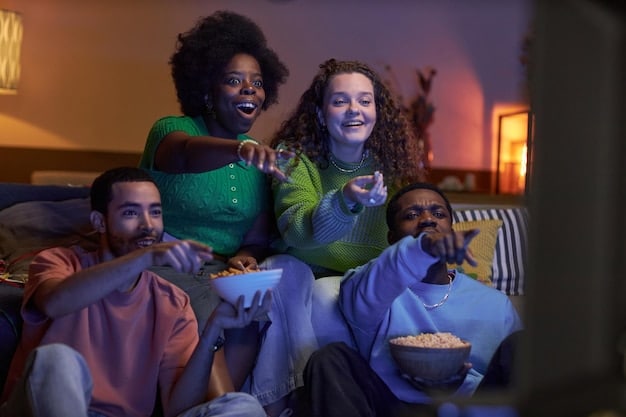
The late-night television landscape is undergoing a historic transition as a new guard of hosts takes over iconic desks across major networks.
This inquiry, Late-Night TV Shake-Up: How Are New Hosts Impacting Ratings Across Networks?, explores how fresh personalities are navigating the complex intersection of traditional linear ratings and modern digital consumption.
As viewership habits evolve, understanding the relationship between these new voices and network performance is critical to predicting the future of this American broadcasting staple.
The shifting sands of late-night dominance
Late-night television, historically a battleground for network supremacy, has seen its traditional viewership patterns challenged.
The departure of long-standing hosts and the introduction of new talent have undeniably reshaped the competitive landscape. This section explores the historical context of late-night ratings battles and sets the stage for understanding the current dynamic.
For roughly 60 years, shows like The Tonight Show and Late Show served as cultural touchstones, drawing millions of viewers consistently.
These programs not only entertained but also shaped political discourse and public opinion. The hosts became household names, embodying a certain charm, wit, and sensibility that resonated with broad audiences.
Their success was often measured by their ability to attract the coveted 18-49 demographic, which translated directly into advertising revenue and network prestige.
The era of established hosts and stable viewership
The reigns of figures like Johnny Carson, David Letterman, and Jay Leno defined eras of stable, predictable viewership.
Their consistent presence fostered a sense of familiarity and routine for millions of Americans, who often tuned in as a nightly ritual.
This predictability allowed networks to build strong advertising relationships and cemented late-night as a reliable, high-performing segment of their programming.
- Strong brand loyalty built over decades.
- Predictable advertising revenue streams.
- Cultural omnipresence of iconic hosts.
However, the media landscape has dramatically changed, introducing new challengers beyond the traditional networks.
Streaming services, social media, and on-demand content have fragmented the audience, making it increasingly difficult for any single program to command the same level of linear viewership enjoyed by past late-night giants.
New hosts, new strategies: a closer look at key players

The transition to new hosts has been more than just a change in personality; it has often heralded a shift in content strategy, audience targeting, and even the very definition of what late-night television should be.
Examining how different networks have approached these transitions offers insight into the varying impacts on their ratings.
When Jimmy Fallon took over The Tonight Show, NBC aimed for a more youth-oriented, viral-friendly approach, emphasizing games, musical parodies, and celebrity interactions that often generated buzz online.
This contrasted with the more traditional monologue and interview style of his predecessors.
Meanwhile, Stephen Colbert at The Late Show on CBS leaned into his satirical roots, offering a more politically charged and intellectually rigorous brand of humor, especially during politically charged times.
Diverse approaches to engaging audiences
Other networks have experimented with different formats and demographics. ABC’s Jimmy Kimmel Live! has consistently carved out its niche by blending celebrity interviews with relatable, often self-deprecating humor.
More recently, shows like Late Night with Seth Meyers on NBC have found success by focusing on in-depth political commentary, appealing to viewers seeking more substantive analysis alongside their laughs.
- Fallon’s emphasis on viral content and musical segments.
- Colbert’s pivot to detailed political commentary.
- Kimmel’s blend of celebrity interviews and relatable humor.
These strategic shifts reflect a broader understanding that the late-night audience is no longer monolithic. Viewers are fragmented, and successful hosts must cultivate a distinct voice and appeal that resonates with specific segments of the population, often leveraging digital platforms to extend their reach beyond traditional broadcast times.
Ratings roller coaster: analyzing viewership trends
The initial impact of new hosts on ratings is rarely a simple, consistent trajectory. Instead, it often resembles a roller coaster ride, with initial surges, subsequent dips, and gradual stabilization as audiences adjust to the new faces and formats.
Understanding these trends requires a nuanced look at both linear and digital viewership data.
Upon a host’s debut, there’s typically an initial boost in viewership driven by curiosity and media hype. However, sustaining this momentum is the true challenge.
Audiences may return to their previous habits, or the new host’s style may not resonate long-term. This initial dip is common and often not indicative of long-term failure, but rather a period of adjustment for both the show and its viewers.
Over time, successful hosts manage to build a loyal following, settling into a stable, albeit often lower, viewership base compared to the peak years of their predecessors.
The challenge of measuring modern viewership
Traditional Nielsen ratings, which primarily measure linear television viewership, no longer tell the whole story.
A significant portion of late-night content is consumed through digital platforms: YouTube clips, social media engagements, and network streaming apps.
These metrics often paint a more complete picture of a show’s influence and reach, even if linear ratings show declines.
- Initial curiosity surges followed by stabilization.
- Discrepancy between linear and digital viewership.
- Importance of social media engagement and viral clips.
Therefore, while linear ratings might appear lower for some current hosts compared to their predecessors, their overall cultural footprint and impact, particularly among younger demographics, might be significantly larger due to their digital presence.
This complicates a direct “apples-to-apples” comparison and requires a more holistic approach to assessing success.
The demographic shift: who’s watching now?
One of the most significant impacts of the late-night shake-up has been a discernible shift in the demographics of who is tuning in.
As new hosts cater to different tastes and sensibilities, their audiences naturally skew towards particular age groups, political affiliations, and cultural interests. This demographic evolution is crucial for advertisers and networks alike.
Younger demographics, particularly those under 35, are increasingly consuming content on platforms like YouTube and TikTok, often in shorter, digestible clips rather than full episodes.
This shift profoundly affects how late-night shows measure success and how they tailor their content.
Shows with a strong digital presence and viral segments are better positioned to capture this elusive demographic, even if their traditional linear ratings remain modest.
Attracting younger audiences through digital channels
Hosts who successfully integrate social media into their programming and produce shareable content are more likely to resonate with younger, digitally native audiences.
This means creating segments designed to go viral, engaging with viewers on platforms like Twitter and Instagram, and perhaps even collaborating with internet celebrities.
The goal is to meet the audience where they are, rather than expecting them to flock to traditional broadcast channels.
- Increased consumption of content on digital platforms.
- Tailoring content for viral potential and shareability.
- Engagement with hosts and shows via social media.
This demographic fragmentation means networks are no longer just competing against each other, but against myriad digital entertainment options. Late-night shows must continuously innovate and adapt their content and distribution strategies to remain relevant and attract the next generation of viewers.
Beyond the numbers: cultural influence and political impact

While ratings provide a concrete measure of commercial success, the impact of late-night television extends far beyond mere viewership numbers.
Hosts, especially those with strong comedic and journalistic chops, wield considerable cultural influence and can play a significant role in shaping public discourse and political opinion.
This less tangible but equally important aspect of late-night television remains robust, even with evolving viewership metrics.
During major political events or social upheavals, late-night hosts often become important commentators, delivering satire, analysis, and a sense of shared experience to millions.
Their monologues and interviews can simplify complex issues, challenge politicians, and provide catharsis through humor.
This ability to resonate culturally and politically gives late-night hosts a unique platform that transcends mere entertainment, making them influential public figures.
The role of satire and commentary in public discourse
The satirical nature of many late-night segments allows hosts to address sensitive topics in a way that is both entertaining and thought-provoking. By using humor as a lens, they can critique societal norms, interrogate political decisions, and encourage critical thinking among their audience. This role is particularly vital in an era of fragmented media and diverse information sources, offering a shared touchpoint for national conversations.
- Ability to simplify complex political and social issues.
- Providing catharsis and shared experience through humor.
- Shaping public perception and encouraging critical discourse.
Therefore, while linear ratings might indicate a smaller traditional audience, the clips of these hosts’ most impactful segments often go viral online, reaching millions more and extending their cultural and political influence far beyond the initial broadcast.
This amplified reach highlights that the true impact of late-night isn’t solely confined to traditional viewership metrics.
The future of late-night: adaptation as the new constant
The continuous shake-up in late-night television is not merely a passing phase but rather a reflection of the broader evolution of media consumption.
The future of these iconic shows will hinge on their ability to adapt to changing technologies, viewer habits, and content preferences. Stagnation is no longer an option in this dynamic landscape.
The push towards more digital-first content, shorter segments optimized for social sharing, and diverse voices will likely intensify.
Networks and hosts must continue to experiment with new formats, explore innovative ways to engage audiences across platforms, and perhaps even rethink the traditional nightly broadcast schedule.
The ability to be nimble and responsive to a rapidly evolving media environment will determine long-term success.
Innovations and evolving audience expectations
Future late-night shows might integrate more interactive elements, harness artificial intelligence for personalized content recommendations, or even leverage virtual reality to create immersive experiences.
The emphasis will shift further from simply broadcasting to truly engaging with an increasingly active and connected audience.
Furthermore, the demand for diverse representation, both in terms of hosts and content, will likely remain a crucial factor in attracting and retaining viewers.
- Increased emphasis on digital and social media integration.
- Exploration of new formats and interactive elements.
- Focus on diverse voices and content for broad appeal.
Ultimately, the success of late-night television in the coming years will be measured not just by linear ratings, but by its overall cultural relevance, its ability to generate buzz, and its capacity to connect with audiences wherever they choose to consume content.
Adaptation will be the key to survival and continued influence.
| Key Point | Brief Description |
|---|---|
| 📺 Ratings Variability | New hosts often see initial surges then stabilization, with linear ratings potentially lower but digital engagement higher. |
| demographic Shift | Audiences are younger and more digitally native, requiring tailored content for viral sharing and social media. |
| 💡 Content Strategy | Hosts employ diverse approaches, from viral games to political commentary, reflecting audience segmentation. |
| 🌐 Cultural Influence | Beyond ratings, hosts maintain significant roles in public discourse and satire, amplified by digital reach. |
Frequently asked questions about late-night TV ratings
Yes, new hosts are increasingly appealing to younger, more digitally savvy audiences. Shows are adapting their content to be more shareable on social media platforms like YouTube and TikTok, shifting viewership patterns from traditional linear television towards online consumption and engagement with clips and viral moments.
Networks are now relying heavily on digital metrics, including YouTube views, social media engagement (likes, shares, comments), and streaming app usage. These data points provide a more comprehensive view of a show’s reach and influence, acknowledging that many viewers consume content outside of traditional broadcast times, especially younger audiences.
Not always a sustained dip. There’s often an initial spike in viewership due to curiosity, followed by a period of adjustment where ratings may fluctuate. Long-term success depends on the new host’s ability to build a loyal audience consistently. Some shows manage to hold steady or even grow their base over time, while others struggle for sustained appeal.
Social media is crucial for expanding reach beyond linear TV. Hosts leverage platforms to promote viral segments, engage with fans, and create buzz. Content specifically designed for online sharing boosts visibility, drives discussions, and attracts younger demographics who might not tune into traditional broadcasts, proving vital for a show’s overall cultural impact.
New late-night hosts continue to influence discourse by offering satirical commentary, conducting timely interviews, and framing current events through humor. Their content, often shared widely online, helps shape public opinion and provides a platform for critical discussion, underscoring their significance beyond just entertainment value, particularly in politically charged times.
Conclusion
The late-night television landscape is in a perpetual state of evolution, driven significantly by the introduction of new hosts.
While traditional linear ratings may reflect shifting viewership habits, a complete understanding of their impact requires factoring in digital engagement, demographic shifts, and the enduring cultural and political influence these shows command.
The future success of late-night hinges on continuous adaptation, innovation, and a willingness to meet audiences across diverse platforms, ensuring this beloved genre remains a relevant and dynamic force in American television.
For deeper insights into how these programming shifts influence viewer behavior, see how Resonate data reveals the impact of late-night shakeups on TV audiences.