Cable Originals: Interactive Storytelling in 2026 Engagement Model
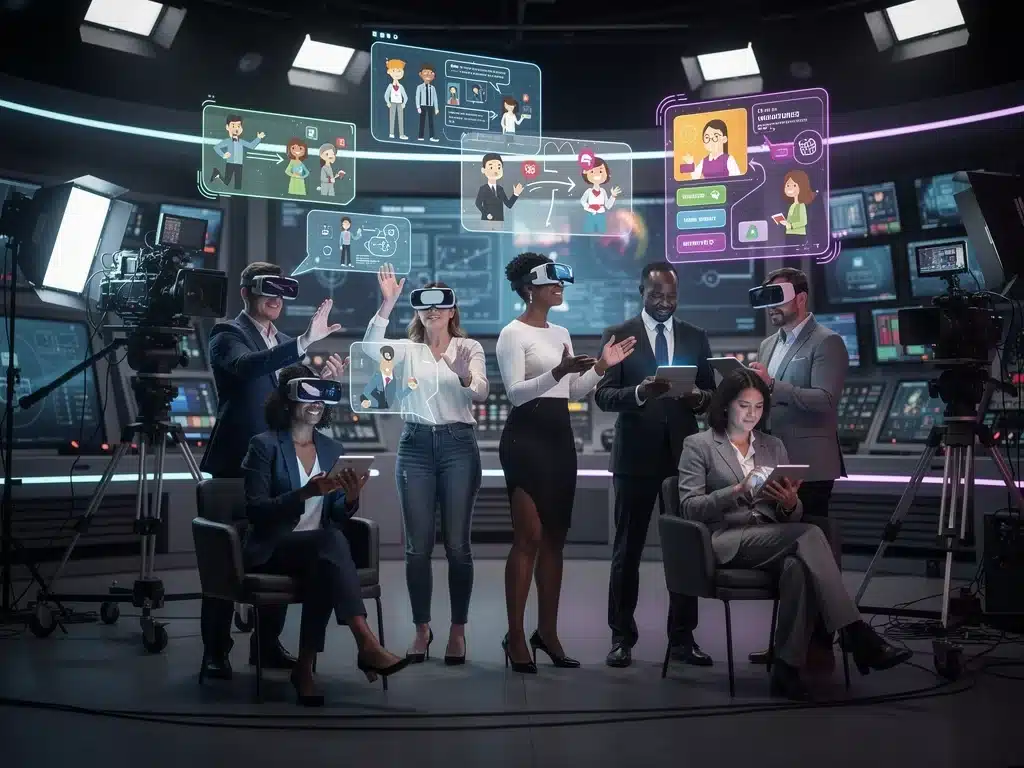
Cable networks in 2026 are rapidly adopting interactive storytelling to transform passive viewers into active participants.
This report delivers a direct, objective breakdown of how original programs are integrating branching narratives, the technology driving this shift, and the audience engagement metrics you need to watch next.
The Ascent of Interactive Storytelling in Cable Originals
Cable originals are increasingly investing in technologies that enable viewers to influence narratives, characters, and even outcomes.
This paradigm shift represents a strategic move to combat declining linear viewership and enhance audience loyalty.
The integration of interactive elements is not merely a gimmick; it’s a fundamental reimagining of content consumption.
Industry reports indicate a substantial increase in development budgets allocated to interactive projects, signaling a long-term commitment.
This new era promises a much deeper connection between content and consumer, moving beyond simple viewership to active participation.
The goal is to create memorable experiences that foster community and repeated engagement with cable originals.
Technological Underpinnings Driving Adoption
Advanced streaming platforms and enhanced broadband capabilities are crucial enablers for interactive storytelling.
These technological advancements provide the necessary infrastructure for seamless, real-time viewer input and dynamic content delivery.
Artificial intelligence and machine learning also play a pivotal role in personalizing interactive experiences. Algorithms can adapt storylines based on individual viewer preferences, creating unique narrative paths for each participant.
The evolution of these technologies ensures that interactive experiences are robust, responsive, and truly immersive.
Without these foundational elements, the ambitious vision for Cable Originals Interactive Storytelling would remain largely theoretical.
- Real-time decision processing for branching narratives.
- AI-driven personalization of content elements.
- High-bandwidth streaming for uninterrupted interactive flows.
- Integrated analytics for understanding viewer choices.
The commitment to these technological frontiers underscores the industry’s belief in interactive storytelling as the future.
Major studios are forming dedicated interactive content divisions, hiring specialists in game design and user experience.
New Viewer Engagement Models Emerging by 2026
The traditional model of passive consumption is being redefined as viewers become active participants in the storytelling process.
This shift is creating novel forms of engagement, moving beyond simple viewing metrics.
Content creators are now focused on ‘choice architecture,’ designing narratives that offer meaningful decisions without overwhelming the audience.
The aim is to empower viewers, making them feel genuinely invested in the story’s progression.
These new engagement models are proving effective in retaining audiences and attracting younger demographics.
The ability to directly influence a story resonates strongly with a generation accustomed to personalized digital experiences.
Defining the Interactive Experience: Beyond Basic Choices
Early interactive attempts often focused on rudimentary ‘choose your own adventure’ mechanics.
However, the 2026 model for Cable Originals Interactive Storytelling is far more sophisticated, incorporating nuanced interactions.
This includes elements like influencing character development, solving in-story puzzles, or even participating in live-streamed narrative events.
The complexity of interaction is scaling up significantly, demanding more from both creators and viewers.
The goal is to blur the lines between gaming and traditional television, creating a hybrid form of entertainment. This fusion offers a richer, more multifaceted experience than either medium could provide independently.
- Deep narrative branching based on viewer decisions.
- Integration of augmented reality (AR) elements for immersive scenes.
- Live interactive events where audience input shapes real-time plot points.
- Social interaction features, allowing shared viewing experiences.
The industry is keenly observing which interactive formats resonate most with audiences. This iterative process of creation and feedback is vital for refining the new viewer engagement model.
Case Studies: Early Adopters and Their Impact
Several pioneering cable originals have already begun experimenting with interactive elements, providing valuable insights into audience reception. These early ventures are shaping best practices and identifying pitfalls.
One notable example demonstrated how real-time audience voting on character actions significantly boosted viewership and social media buzz.
The experiment proved the viability of direct viewer influence on narrative arcs.
Another series incorporated a companion app, allowing viewers to unlock bonus content and make minor plot suggestions, which were occasionally integrated into subsequent episodes.
These successes highlight the potential of Cable Originals Interactive Storytelling.
Successful Interactive Formats and Their Lessons
The most successful interactive formats share common traits: clear choices, immediate feedback, and meaningful consequences. Viewers want their input to genuinely matter to the story.
Simplicity in interaction design is also crucial; complex interfaces can detract from the storytelling. The balance between control and narrative flow is a delicate one that creators are learning to master.
These early case studies emphasize that interactive elements must serve the story, not overshadow it. The technology should enhance the narrative, making it more engaging, rather than merely being a technological showcase.
- Clear and impactful decision points.
- Seamless integration of interactive prompts.
- Narrative consistency across branching paths.
- User-friendly interfaces for interaction.
The lessons learned from these early interactive cable originals are invaluable for future productions. They guide the development of more sophisticated and engaging interactive experiences.
The Role of Technology: AI, VR, and AR in 2026
By 2026, artificial intelligence, virtual reality, and augmented reality are poised to become integral to the interactive storytelling toolkit for cable originals. These technologies will unlock new dimensions of immersion and personalization.
AI will enable dynamic character responses and adaptive plot lines, making each viewing session truly unique. VR and AR will transport audiences directly into the story world, offering unparalleled levels of presence and agency.
The synergy between these technologies will create a rich tapestry of interactive possibilities, far beyond what is currently imagined. This technological convergence is central to the future of Cable Originals Interactive Storytelling.
How AI Enhances Narrative Personalization
AI algorithms can analyze viewer data, including past choices and viewing habits, to tailor interactive narratives. This personalization extends to character dialogues, environmental details, and even emotional pacing.
The result is a narrative experience that feels uniquely crafted for each individual, deepening their emotional connection to the story. This level of customization is a significant draw for modern audiences seeking bespoke content.
AI’s ability to process vast amounts of data in real time allows for complex adaptive storytelling, where plot points can shift organically based on audience input. This moves beyond pre-scripted branching to truly emergent narratives.
AI-driven tools are also assisting creators in managing the exponential complexity of interactive scripts. These tools help predict narrative coherence and potential plot holes across multiple branches.
Challenges and Opportunities for Cable Originals
Despite the immense potential, the shift to interactive storytelling presents significant challenges for cable originals. Production costs, creative complexity, and audience adoption are key hurdles.
Developing interactive narratives requires a different skill set than traditional linear storytelling, necessitating new talent and production pipelines. Managing multiple narrative paths also adds layers of complexity to writing and directing.
However, these challenges are outweighed by the opportunities to redefine entertainment and capture new audiences.
The ability to offer a truly unique and engaging experience positions cable originals favorably in a competitive landscape.
Overcoming Production Complexity for Interactive Content
One major challenge is the exponential increase in content creation required for branching narratives. Each choice can lead to entirely new scenes, dialogues, and outcomes, multiplying production demands.
Studios are exploring modular content creation and advanced authoring tools to streamline this process. Cross-disciplinary teams, combining filmmakers with game designers, are becoming the norm.
Investment in robust interactive platforms and specialized software is crucial to manage the intricate web of choices and consequences. This infrastructure is vital for scalable Cable Originals Interactive Storytelling.
- Increased budgets for scriptwriting and production.
- Need for specialized interactive content creators.
- Development of new production workflows.
- Scalable technology platforms for managing complexity.
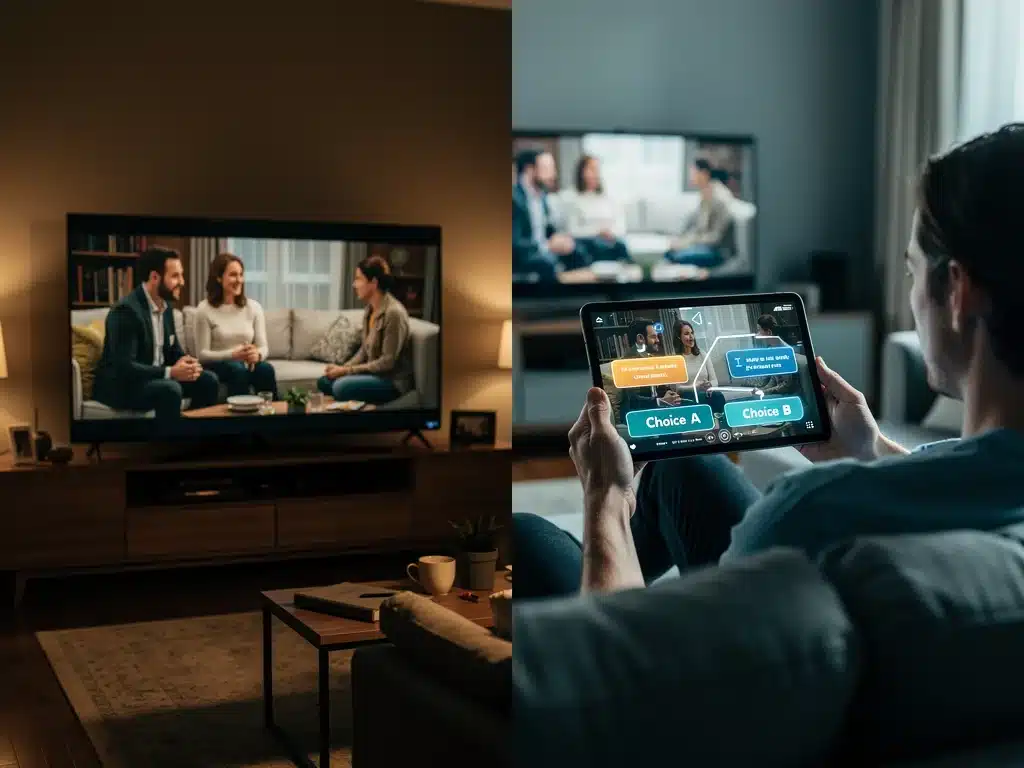
Addressing these production complexities is essential for the widespread adoption and success of interactive cable originals. The industry is actively seeking innovative solutions to these creative and logistical puzzles.
Audience Reception and Market Dynamics
Initial audience reception to interactive cable originals has been largely positive, particularly among younger demographics. The novelty and agency offered by these formats resonate strongly with digitally native viewers.
Market dynamics indicate a growing demand for personalized and participatory entertainment experiences. Cable originals that successfully implement interactive storytelling stand to gain a significant competitive edge.
However, broader audience adoption will depend on the intuitiveness of the interactive experience and the perceived value of participation. The content must be compelling enough to warrant the extra effort from viewers.
Measuring Success in Interactive Storytelling
Traditional viewership metrics are insufficient for interactive content; new analytics are emerging to gauge engagement. These include tracking decision points, time spent interacting, and narrative path completion rates.
Understanding viewer behavior within interactive narratives provides crucial data for refining future productions. This data-driven approach is key to optimizing the Cable Originals Interactive Storytelling model.
Success will ultimately be measured not just by ratings, but by the depth of viewer immersion and the perceived impact of their choices. A truly engaging interactive experience fosters a sense of ownership over the story.
- Tracking viewer decision paths and their outcomes.
- Analyzing engagement duration and repeat interactions.
- Gathering qualitative feedback on the interactive experience.
- Correlation between interactivity and subscriber retention.
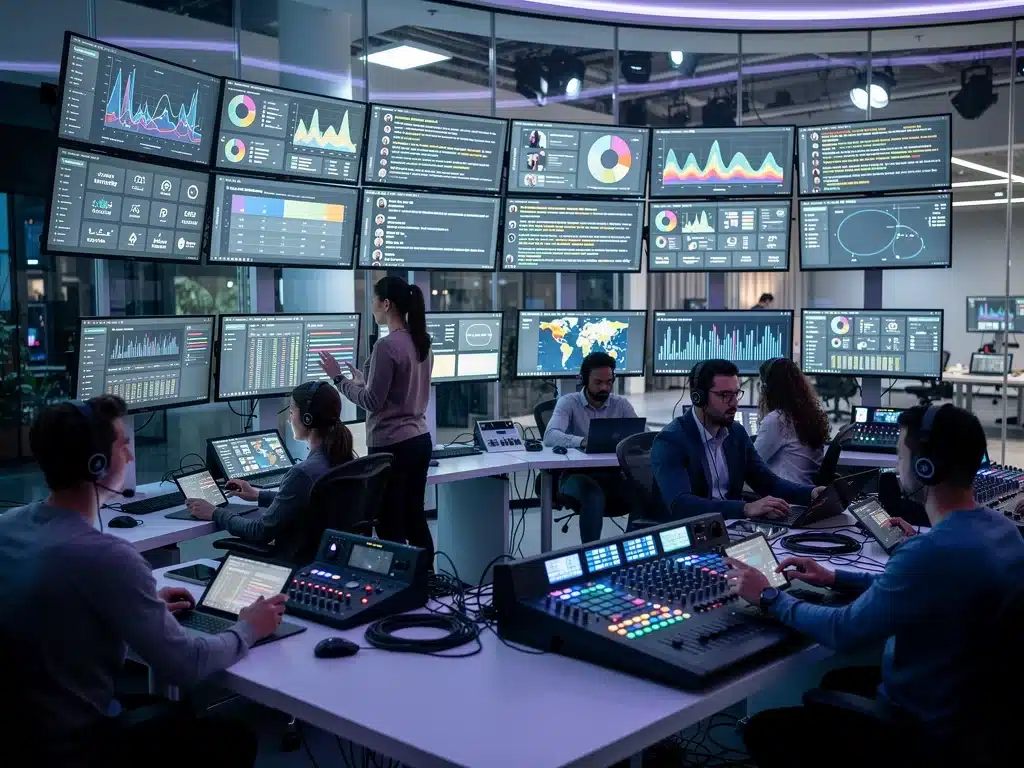
The evolving metrics reflect the changing nature of content consumption, highlighting the need for a more holistic understanding of audience interaction.
Future Outlook: The Evolution of Immersive Content
The trajectory for How Cable Originals Are Leveraging Interactive Storytelling in 2026: A New Viewer Engagement Model points towards increasingly immersive and personalized experiences.
The boundaries between stories and games will continue to blur.
Expect to see more convergence with gaming platforms, potentially leading to hybrid content that is simultaneously a show and a game. This evolution promises a richer, more dynamic entertainment landscape.
The future of cable originals lies in offering content that adapts to and involves its audience, creating a truly collaborative storytelling environment. This shift will redefine what it means to ‘watch’ television.
Next-Generation Interactive Storytelling Formats
Beyond current models, future interactive formats might include persistent narrative worlds that evolve over time based on collective audience input. This would transform episodic viewing into an ongoing, communal experience.
We could also see fully generative narratives, where AI dynamically creates storyline elements in real-time, responding to complex viewer interactions. This would push the boundaries of storytelling to unprecedented levels.
The integration of haptic feedback and multi-sensory experiences will further enhance immersion. Imagine feeling the rain in a scene or the rumble of an explosion, all controlled by your choices within a cable original.
The goal is to move towards a state where the viewer is not just an observer or a decision-maker, but an integral part of the story’s fabric. This represents the ultimate aspiration for Cable Originals Interactive Storytelling.
| Key Aspect | Description |
|---|---|
| Viewer Agency | Audiences gain control over narrative choices and character outcomes. |
| Tech Integration | AI, VR, and AR are crucial for personalized and immersive experiences. |
| Engagement Model | Shifts from passive viewing to active, participatory storytelling. |
| Production Evolution | Requires new skills, tools, and workflows for complex narratives. |
Frequently Asked Questions About Interactive Cable Originals
Interactive storytelling in cable originals allows viewers to make choices that influence the narrative, character development, or even the ending of a show. It transforms passive consumption into an active, participatory experience, deepening engagement and making each viewing session potentially unique based on individual decisions.
Cable originals are adopting interactive storytelling to combat declining linear viewership, enhance audience loyalty, and attract younger, digitally native demographics. This strategy aims to create deeper connections with viewers, offering personalized and engaging experiences that stand out in a competitive media landscape, thereby redefining the traditional engagement model.
Advanced streaming platforms, high-speed internet, artificial intelligence (AI), virtual reality (VR), and augmented reality (AR) are key technologies. AI enables personalized narratives and dynamic responses, while VR and AR create immersive story worlds. These technologies provide the infrastructure for seamless viewer input and complex, adaptive content delivery.
Challenges include significantly higher production costs due to branching narratives, increased creative complexity in scriptwriting and directing, and the need for specialized talent in areas like game design and user experience. Developing robust interactive platforms and managing multiple narrative paths also pose substantial logistical hurdles for studios.
Success is measured beyond traditional viewership ratings, incorporating new metrics such as decision points tracked, total time spent interacting, and narrative path completion rates. The depth of viewer immersion, the perceived impact of their choices, and overall audience satisfaction are crucial indicators, reflecting a shift towards quality of engagement over sheer numbers.
Perspectives and Implications
The evolution of How Cable Originals Are Leveraging Interactive Storytelling in 2026: A New Viewer Engagement Model signals a pivotal moment for the entertainment industry.
This strategic pivot is not just about technology; it’s about fundamentally rethinking the relationship between content and audience.
As cable originals continue to push these boundaries, we can expect a convergence of television, gaming, and social media into new, hybrid forms of entertainment.
This will likely lead to innovative business models and a redefinition of what constitutes a ‘show’.
This transition relies heavily on how passionate communities react to experimental content formats.
Historically, when publishers test the limits of interactive fiction—whether through mobile platforms, experimental television, or branching visual novels—it is the dedicated online fandoms that dissect every choice, archive lost pathways, and keep the dialogue alive.
To engage with a community built entirely around analyzing branching plotlines, user-driven choices, and the legacy of specialized story paths, you can check out the discussions and fan-led retrospectives on the r/Originals subreddit on Reddit.
Industry observers should monitor the adoption rates and creative innovations in this space, as they will dictate the future landscape of digital entertainment.
The success of interactive storytelling will pave the way for a more personalized and participatory media future.