Exclusive Insights: What 2026 Brands Seek in Product Testers
Leading brands in 2026 are shifting product testing requirements toward data quality, requiring participants to demonstrate hyper-specific demographic alignment, structured feedback skills, and strong analytical capabilities.
This operational insight details how companies select candidates for limited-series releases, key screening criteria across major industries, and proven strategies to qualify for high-tier pre-launch evaluations.
The Evolving Landscape of Product Testing in 2026
The consumer landscape is constantly shifting, and with it, the demands placed on product development and testing.
Brands are no longer content with superficial feedback; they seek deep, actionable insights to refine their limited series offerings before a wider release.
This evolution means that the role of limited series product testers is becoming increasingly specialized and critical. Companies are now focusing on specific demographics and skill sets that can provide truly valuable data.
As 2026 approaches, the criteria for selecting these testers are becoming more stringent, emphasizing authenticity, analytical capabilities, and a genuine connection to the product category.
Key Attributes Brands Prioritize for Limited Series Product Testers
Leading brands are meticulously defining the characteristics they value most in their limited series product testers. This goes beyond mere enthusiasm for new products; it involves a blend of technical aptitude and insightful communication.
Testers are expected to provide comprehensive reports, detailing not just their experience but also offering constructive criticism and suggestions for improvement.
This level of engagement is crucial for optimizing product performance and user satisfaction.
The emphasis is on finding individuals who can articulate their experiences clearly, pinpointing specific strengths and weaknesses of the product in real-world scenarios.
Analytical Acumen and Detailed Reporting
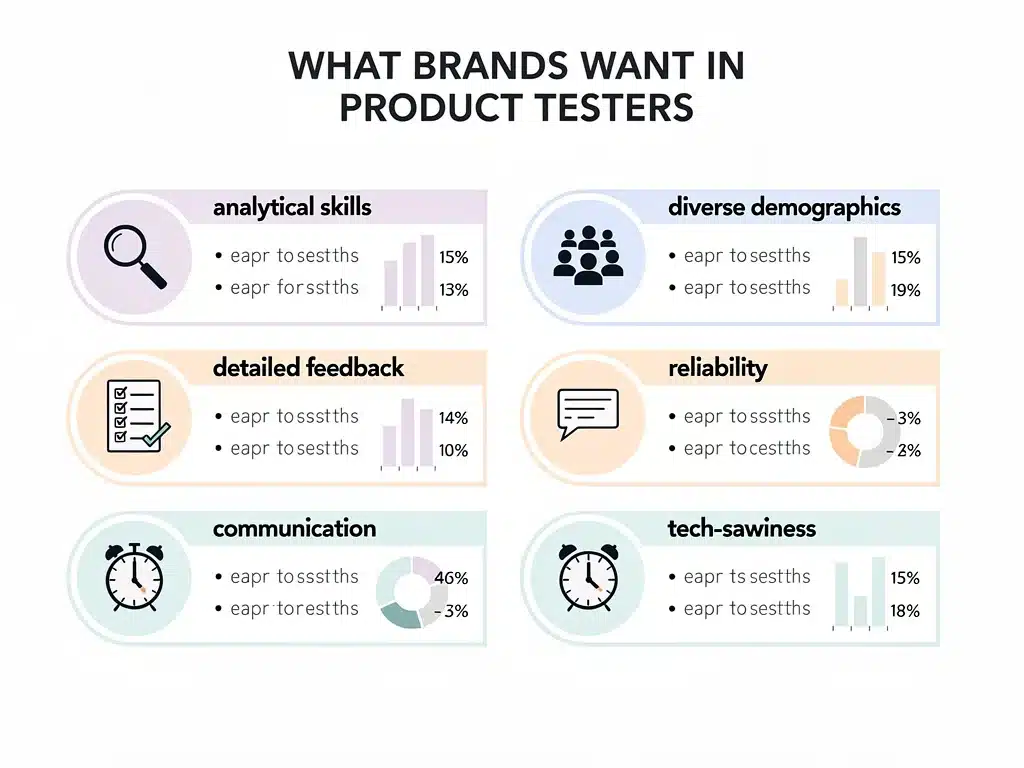
Brands now demand a higher degree of analytical thinking from their limited series product testers. They want individuals who can dissect a product’s features, identify potential flaws, and suggest concrete solutions.
This includes the ability to provide structured feedback, often through detailed questionnaires or video logs, that can be easily translated into actionable development steps. The era of vague, general impressions is rapidly fading.
- Ability to identify specific usability issues.
- Proficiency in articulating user experience nuances.
- Capacity to compare products against competitors.
- Skill in suggesting practical improvements.
Authenticity and Diverse Demographics
Authenticity has become a cornerstone in the selection of limited series product testers. Brands are keen on ensuring that testers represent their target audience genuinely, reflecting diverse backgrounds and real-life usage patterns.
This approach helps in uncovering a wider range of user experiences and potential challenges that might not be apparent in a homogenous testing group. Diversity in testing leads to more inclusive and robust product designs.
The goal is to gather feedback that truly mirrors how the product will be received and used by its intended market, fostering a more genuine connection between brand and consumer.
Technological Integration in Product Testing Methodologies
The integration of advanced technology is revolutionizing how brands engage with limited series product testers.
From AI-powered feedback analysis to biometric data collection, tech is enhancing the depth and breadth of insights gathered.
These tools allow for more precise measurement of user interaction and emotional responses, providing a holistic view of the product experience.
This data-driven approach streamlines the feedback process and makes it more objective.
Such technological advancements are not replacing human testers but rather augmenting their capabilities, enabling them to provide more granular and impactful feedback.
Leveraging AI for Feedback Analysis
Artificial intelligence is increasingly being employed to process and analyze the vast amounts of data generated by limited series product testers.
AI algorithms can identify patterns, sentiments, and emerging trends that might be missed by manual review.
This allows brands to quickly pinpoint critical issues and prioritize development efforts, significantly reducing time-to-market for optimized products. The efficiency gained is a game-changer for competitive industries.
- Automated sentiment analysis of text feedback.
- Identification of recurring issues across multiple testers.
- Predictive modeling for potential market reception.
- Summarization of extensive qualitative data.
Biometric Data and User Experience Tracking
Beyond traditional feedback, some brands are exploring biometric data from limited series product testers to understand subconscious reactions.
This includes eye-tracking, galvanic skin response, and even brainwave analysis, particularly for high-value or innovative products.
This level of physiological insight provides an unparalleled understanding of user engagement and emotional resonance with a product. It offers a deeper layer of data beyond what verbal feedback alone can convey.
While still emerging, this trend highlights the brands’ commitment to leaving no stone unturned in their quest for perfect product-market fit.
The Benefits for Both Brands and Limited Series Product Testers
Engaging in limited series product testers programs offers significant advantages for both the participating individuals and the brands commissioning the tests. It’s a symbiotic relationship that drives innovation and consumer satisfaction.
For brands, it means access to invaluable real-world feedback that can prevent costly mistakes and ensure a successful product launch.
For testers, it’s an opportunity to influence product development and gain early access to cutting-edge items.
These programs foster a sense of community and direct engagement, building loyalty and trust between brands and their most dedicated users.

Early Access and Influence for Testers
For individuals, becoming a limited series product testers means gaining exclusive early access to products that are not yet available to the general public. This can be a significant perk, especially for tech enthusiasts or fashion trendsetters.
More importantly, testers have the unique opportunity to directly influence the final design and functionality of these products. Their feedback can shape the future of a product, making their contributions highly impactful.
This direct channel to product development teams is a powerful motivator, offering a sense of ownership and importance to the testing process.
Risk Mitigation and Product Optimization for Brands
For brands, leveraging limited series product testers is a crucial strategy for mitigating risks associated with new product launches. It allows them to identify and rectify issues in a controlled environment before a full-scale market release.
This iterative feedback loop ensures that products are optimized for performance, usability, and customer satisfaction, leading to a higher success rate post-launch. It’s an investment that pays dividends in reputation and sales.
By addressing potential problems early, brands can avoid negative public reception and costly recalls, safeguarding their investments and enhancing their market standing.
Challenges and Ethical Considerations in Product Testing
While the benefits are clear, the process of engaging limited series product testers also presents certain challenges and ethical considerations. Brands must navigate these carefully to maintain trust and ensure fair practices.
Ensuring data privacy, managing expectations, and providing clear guidelines are paramount. Transparency in the testing process is key to building a credible and ethical program.
Addressing these challenges proactively helps in fostering a positive and productive relationship with testers, ensuring the integrity of the feedback received.
Ensuring Data Privacy and Confidentiality
With the increasing use of technology and personal data in product testing, ensuring the privacy and confidentiality of limited series product testers is a critical ethical concern. Brands must implement robust data protection measures.
Clear consent forms and anonymization protocols are essential to protect testers’ personal information and ensure compliance with data protection regulations. Trust is foundational to a successful testing program.
Failure to uphold these standards can lead to significant reputational damage and legal repercussions, underscoring the importance of ethical data handling.
Managing Expectations and Fair Compensation
Brands must also manage the expectations of limited series product testers regarding the scope of their involvement and any compensation or rewards. Clear communication from the outset is vital to avoid misunderstandings.
Whether it’s free products, gift cards, or monetary compensation, the terms should be transparent and fair, reflecting the time and effort testers invest. A well-defined compensation structure encourages sustained engagement.
Establishing clear guidelines on feedback requirements and communication channels also helps in setting realistic expectations for both parties involved.
Future Trends Shaping the Limited Series Product Tester Landscape
Looking ahead to 2026 and beyond, several emerging trends will continue to shape the landscape for limited series product testers. The focus will likely shift even further towards hyper-personalization and community-driven feedback loops.
Virtual and augmented reality (VR/AR) testing environments could become more prevalent, allowing for product interaction in simulated settings before physical prototypes are even built. This promises to accelerate the design cycle.
The role of influencers and micro-communities in product testing is also expected to grow, leveraging their built-in audiences for targeted and authentic feedback.
Hyper-Personalization in Tester Selection
Brands will increasingly seek limited series product testers whose lifestyles and preferences align precisely with their product’s target niche. This hyper-personalization ensures that feedback is highly relevant and actionable.
Advanced analytics and demographic profiling will facilitate the identification of these ideal testers, moving beyond broad categories to highly specific user segments. The goal is a perfect match between tester and product.
This targeted approach not only refines product development but also strengthens brand connection with its core consumer base by demonstrating a deep understanding of their needs.
Community-Driven Testing Platforms
The rise of dedicated online communities and platforms for limited series product testers is a significant trend. These platforms facilitate peer-to-peer discussions, collaborative problem-solving, and collective feedback aggregation.
Such communities provide brands with a continuous stream of insights and a loyal base of engaged users. The collective intelligence of these groups can be far more powerful than individual feedback alone.
These platforms foster a sense of belonging and shared purpose among testers, making the testing experience more rewarding and sustainable over time.
| Key Requirement | Brand Focus |
|---|---|
| Analytical Feedback | Detailed, actionable insights for product refinement. |
| Diverse Representation | Authentic user experiences across various demographics. |
| Technological Aptitude | Ability to use and provide feedback on advanced features. |
| Ethical Engagement | Privacy, transparency, and fair compensation for testers. |
Frequently Asked Questions About Limited Series Product Testers
The primary role of limited series product testers is to provide detailed, constructive feedback on pre-release products. This feedback helps brands identify issues, refine features, and ensure optimal user experience before a wider market launch, ultimately shaping the final product.
Brands select limited series product testers based on specific criteria, including demographic alignment, analytical skills, and genuine interest in the product category. They often look for individuals who can provide thorough, actionable insights, moving beyond simple opinions to detailed critiques.
Product testers often receive early access to cutting-edge products, the opportunity to influence product development, and sometimes compensation in the form of free items, gift cards, or monetary payment. It’s a chance to be at the forefront of innovation as limited series product testers.
Yes, ethical considerations include ensuring data privacy and confidentiality for limited series product testers, managing expectations clearly, and providing fair compensation. Transparency in the testing process and adherence to data protection regulations are crucial for building trust and a reputable program.
Technology is significantly impacting product testing through AI-powered feedback analysis, biometric data collection, and virtual testing environments. These advancements allow for more precise insights, faster development cycles, and a deeper understanding of user experience for limited series product testers.
Looking Ahead
The landscape for limited series product testers is undergoing a transformative shift, with brands increasingly seeking specialized, analytical, and authentic feedback.
This evolution underscores a commitment to delivering highly refined products that resonate deeply with target consumers.
For a detailed breakdown of established sampling platforms, payment models, and application tips, explore Think Save Retire’s guide to companies looking for product testers.
As technology continues to integrate into testing methodologies, the demand for discerning and tech-savvy testers will only grow.
Aspiring limited series product testers should focus on developing strong analytical and communication skills to meet these evolving expectations.
For brands, investing in robust and ethically sound product testing programs will be paramount to innovation, risk mitigation, and fostering genuine consumer loyalty in an ever-competitive market.