Network TV Sports Broadcasting 2026: New Technologies & Engagement
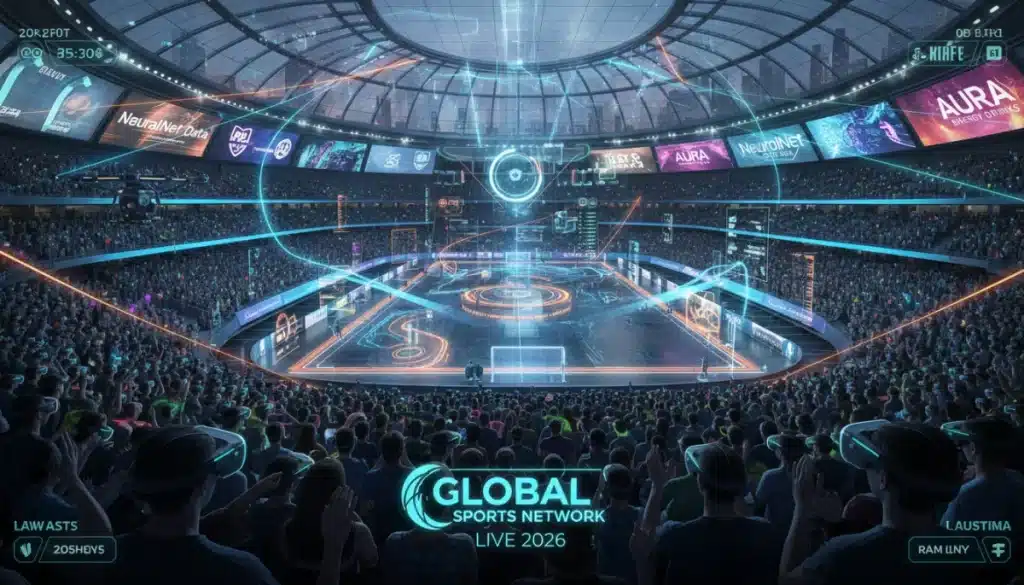
In 2026, the live entertainment ecosystem operates under an aggressive distribution paradigm known as “Multi-Platform Rights Fragmentation.”
Driven by the entry of big-tech streaming services into premium sports, traditional television networks face unprecedented structural pressure to merge linear and digital feeds.
This update covers The Evolution of Network TV Sports Broadcasting, focusing directly on hybrid delivery models, interactive streaming features, and the key audience metrics broadcasters need to monitor next to maintain scale.
The Rise of Immersive Viewing Experiences in Sports Broadcasting
The quest for deeper viewer engagement is pushing broadcasters to adopt technologies that transcend traditional flat-screen viewing.
Immersive experiences, once niche, are becoming central to the strategy for Network TV Sports Broadcasting in 2026. This involves everything from advanced camera systems to augmented and virtual reality integrations.
Fans are no longer content with passive consumption; they demand to be part of the action.
This desire fuels the development of technologies that bring the stadium atmosphere directly into living rooms, creating a more personal and interactive connection to the game. The goal is to blur the lines between being a spectator and a participant.
This push towards immersion is a critical component of The Evolution of Network TV Sports Broadcasting. It promises to revolutionize how audiences interact with their favorite sports, setting new benchmarks for quality and interactivity.
Augmented Reality (AR) Integration
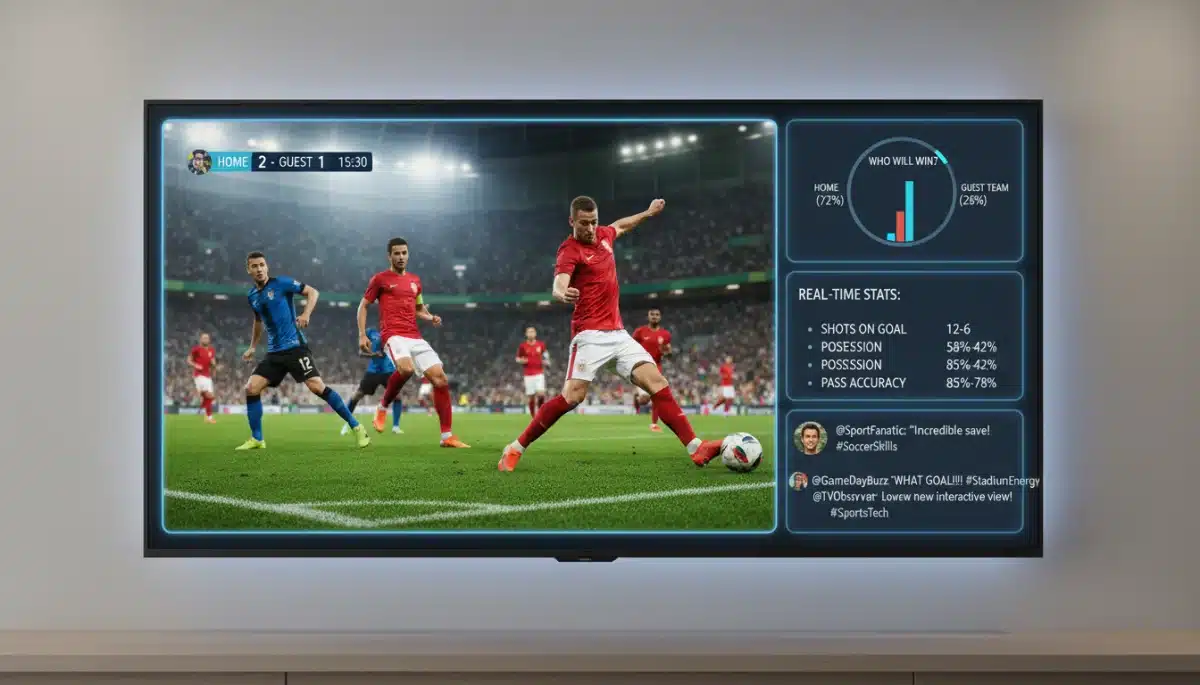
- AR overlays provide real-time statistics, player tracking, and dynamic graphics directly onto the live footage.
- This technology enhances understanding of complex plays and adds a layer of visual information without disrupting the flow of the game.
- Broadcasters are using AR to create interactive segments, allowing viewers to explore data points or player profiles with a simple tap or gesture.
Virtual Reality (VR) and 360-Degree Coverage
VR offers the ultimate immersive experience, transporting viewers directly to the sidelines or even inside the huddle. While widespread VR adoption still faces hurdles, its potential for live sports is undeniable, especially for premium content.
360-degree cameras provide viewers with the freedom to choose their own perspective, offering a level of control previously unimaginable.
This technology empowers fans to become their own directors, selecting the angles and replays they wish to see, thereby enhancing their personal engagement with Network TV Sports Broadcasting.
The Impact of AI and Data Analytics on Sports Production
Artificial intelligence and sophisticated data analytics are no longer futuristic concepts; they are foundational elements shaping Network TV Sports Broadcasting in 2026.
These technologies are optimizing every aspect of production, from content creation to audience targeting.
AI-powered tools are enabling broadcasters to automate repetitive tasks, enhance real-time analysis, and even predict game outcomes, offering unprecedented insights to both production teams and viewers.
This efficiency gain allows human talent to focus on creative storytelling and deeper journalistic endeavors.
The integration of AI and data analytics is a cornerstone of The Evolution of Network TV Sports Broadcasting, promising more dynamic, intelligent, and personalized broadcasts than ever before.
Automated Production and Enhanced Storytelling
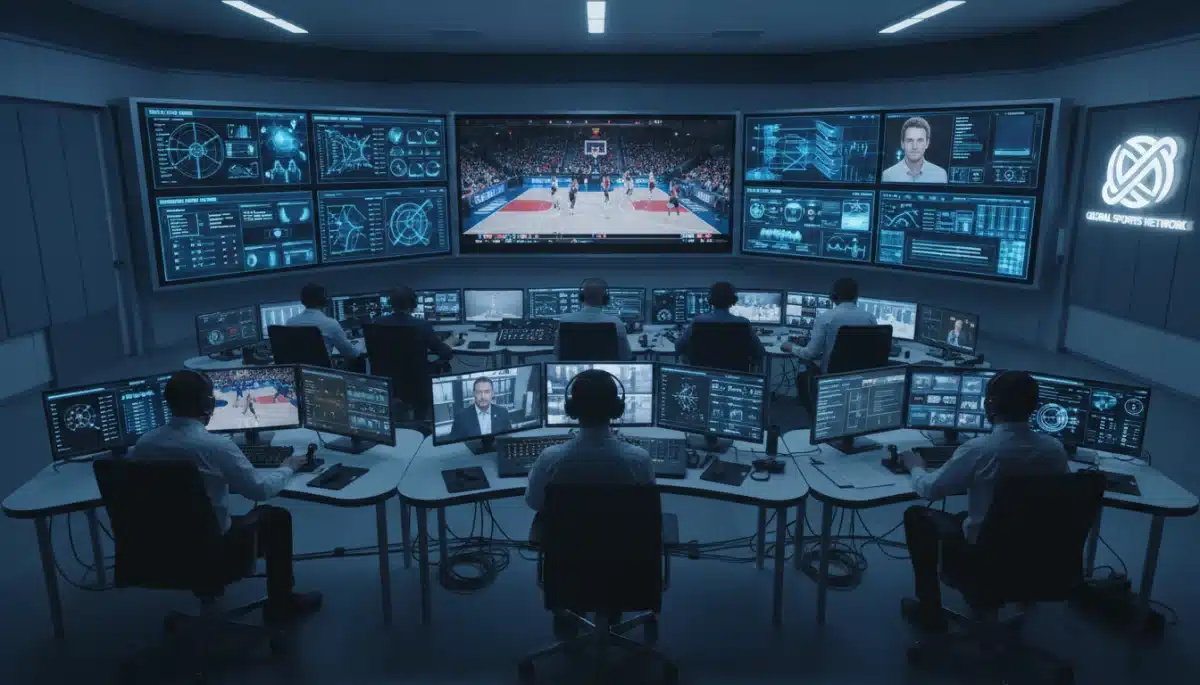
AI algorithms can now manage multiple camera feeds, identify key moments, and even generate highlights packages automatically. This significantly reduces post-production time and allows for faster delivery of content across various platforms.
Beyond automation, AI assists in crafting richer narratives by identifying trends, player performances, and historical contexts that might otherwise be missed.
This intelligent assistance transforms raw data into compelling stories, enriching the viewer’s understanding of the game.
Personalized Content Delivery and Advertising
Data analytics allows broadcasters to understand viewer preferences at an individual level, enabling the delivery of personalized content streams.
This means different viewers might see different replays, statistics, or even commentary tailored to their interests.
Targeted advertising, driven by AI, ensures that commercials are more relevant to the viewer, improving ad effectiveness and potentially reducing viewer fatigue.
This precision advertising is a game-changer for the revenue models supporting Network TV Sports Broadcasting.
The Evolving Role of Streaming and Digital Platforms
While the term “Network TV” traditionally refers to linear broadcast, the reality of 2026 is a hybrid ecosystem where traditional networks heavily leverage streaming and digital platforms.
This integration is vital for reaching younger demographics and offering flexible viewing options, a key aspect of The Evolution of Network TV Sports Broadcasting.
The shift towards digital consumption is driven by consumer demand for on-demand access and multi-device compatibility.
Networks are responding by investing heavily in their own streaming services and forming partnerships with major digital players, ensuring their content remains accessible wherever audiences are.
This convergence means that Network TV Sports Broadcasting is no longer confined to scheduled programming slots but is available across a multitude of platforms, catering to diverse viewing habits and preferences.
Direct-to-Consumer (DTC) Models
- Many traditional networks are launching or expanding their DTC streaming services, offering exclusive content and ad-free options.
- This model provides greater control over content distribution and direct access to viewer data, fostering more personalized experiences.
- DTC platforms are becoming crucial for monetizing niche sports and providing supplementary content that complements linear broadcasts.
Multi-Platform Accessibility
Ensuring sports content is available across smart TVs, mobile devices, tablets, and gaming consoles is paramount. This multi-platform strategy maximizes reach and caters to the modern viewer’s desire to watch sports anytime, anywhere.
The seamless integration between linear TV and digital platforms is critical for maintaining audience share.
Viewers expect to start watching on one device and continue on another without interruption, a standard that Network TV Sports Broadcasting is striving to meet.
Enhanced Interactivity and Social Integration
Viewer engagement in 2026 goes beyond simply watching; it involves active participation and social connection.
Network TV Sports Broadcasting is increasingly incorporating interactive elements and social media integration to create a more dynamic and community-driven experience.
This push for interactivity recognizes that sports are inherently social, and fans want to share their reactions, opinions, and excitement in real-time.
Broadcasters are leveraging this desire to build stronger communities around their content, fostering loyalty and driving viewership.
The emphasis on interactive and social features is a defining characteristic of The Evolution of Network TV Sports Broadcasting, transforming passive audiences into active participants.
Real-time Polls and Fan Commentary
Live polls embedded within broadcasts allow viewers to vote on game predictions, player performances, or controversial calls, with results displayed instantly.
This direct interaction makes viewers feel heard and involved in the broadcast narrative.
Integrating fan commentary, either through curated social media feeds or live call-ins, brings diverse voices directly into the broadcast.
This creates a more inclusive and dynamic viewing experience, reflecting the collective passion of the fanbase for Network TV Sports Broadcasting.
Gamification and Fantasy Sports Integration
Gamified elements, such as predict-the-score contests or virtual leaderboards tied to live events, add an extra layer of excitement. These features tap into the competitive spirit of fans, offering rewards and bragging rights.
Seamless integration with fantasy sports platforms allows viewers to track their fantasy teams and players in real-time within the broadcast interface.
This convergence enhances the viewing experience for a significant segment of the sports audience, further deepening their engagement with Network TV Sports Broadcasting.
The Role of Next-Generation Broadcast Standards
The underlying technical infrastructure of Network TV Sports Broadcasting is also undergoing a significant upgrade, with next-generation standards like ATSC 3.0 playing a crucial role.
These advancements provide the backbone for delivering higher quality content and more interactive features.
ATSC 3.0, also known as “NextGen TV,” offers a more robust and flexible broadcast signal, capable of supporting 4K UHD resolution, advanced audio, and hybrid broadcast-broadband capabilities.
This standard is essential for realizing the full potential of immersive and personalized viewing experiences.
The adoption of these new broadcast standards is fundamental to The Evolution of Network TV Sports Broadcasting, ensuring that the infrastructure can keep pace with technological innovation and viewer demands.
4K UHD and HDR Capabilities
Next-generation standards enable the widespread delivery of 4K Ultra High Definition (UHD) and High Dynamic Range (HDR) content.
This dramatically improves picture quality, offering unparalleled clarity, color accuracy, and contrast, making sports events look more lifelike than ever before.
The enhanced visual fidelity is particularly impactful for fast-paced sports, where every detail matters.
Viewers can appreciate the nuances of player movements and the intensity of the competition with crystal-clear precision, a significant upgrade for Network TV Sports Broadcasting.
Advanced Audio and Hybrid Broadcasting
Immersive audio formats, such as Dolby Atmos, create a more spatial and engaging sound experience, placing viewers right in the heart of the stadium.
This advanced audio complements the superior visual quality, completing the immersive package.
Hybrid broadcast-broadband capabilities allow for the seamless integration of over-the-air broadcasts with internet-delivered content.
This means broadcasters can offer interactive features, on-demand replays, and personalized data directly through the broadcast signal, enriching the Network TV Sports Broadcasting experience without requiring a separate app.
Challenges and Opportunities in the Evolving Landscape
While the future of Network TV Sports Broadcasting in 2026 is bright with innovation, it also presents significant challenges.
Broadcasters must navigate complex technological integrations, evolving business models, and intense competition for viewer attention.
The capital investment required for new technologies, coupled with the need to attract and retain specialized talent, poses considerable hurdles.
Furthermore, the fragmentation of content consumption across numerous platforms demands sophisticated strategies to maintain a cohesive audience base.
Despite these challenges, the opportunities presented by The Evolution of Network TV Sports Broadcasting are immense for those who adapt effectively, promising new revenue streams and deeper connections with fans.
Monetization Strategies and Ad Blockers
Traditional advertising models are being disrupted by ad blockers and viewer preferences for subscription-based, ad-free content.
Broadcasters must innovate their monetization strategies, exploring new forms of sponsorship, integrated advertising, and premium content offerings.
The challenge lies in balancing revenue generation with maintaining a positive viewer experience.
Creative advertising solutions that add value rather than interrupt, such as interactive ads or sponsored content segments, are becoming increasingly important for Network TV Sports Broadcasting.
Content Fragmentation and Rights Management
The proliferation of streaming services and digital platforms leads to content fragmentation, making it challenging for viewers to find all their desired sports content in one place.
This also complicates rights management for leagues and broadcasters, who must negotiate complex distribution deals.
Consolidating content or offering aggregated access solutions could be a key strategy for maintaining viewer satisfaction and market share. Navigating these complexities effectively is crucial for the sustained growth of Network TV Sports Broadcasting.
The Future of Storytelling in Sports Media
Beyond technology, Network TV Sports Broadcasting in 2026 is also undergoing a transformation in how stories are told.
The focus is shifting towards more personalized narratives, deeper dives into athlete journeys, and innovative formats that resonate with diverse audiences.
The availability of vast amounts of data allows for richer, more nuanced storytelling, moving beyond simple game summaries to explore the human elements of sport.
This approach aims to create a stronger emotional connection with viewers, making the broadcast more compelling and memorable.
This evolution in storytelling is a vital component of The Evolution of Network TV Sports Broadcasting, ensuring that technological advancements serve to enhance, rather than overshadow, the inherent drama of sports.
Athlete-Centric Narratives and Documentaries
- Broadcasters are increasingly producing long-form content focusing on the personal stories, training regimens, and mental fortitude of athletes.
- These documentaries and athlete-centric features build deeper connections between fans and their heroes, extending engagement beyond live game broadcasts.
- Such content appeals to a broader audience, including those who may not be traditional sports fans but are drawn to compelling human interest stories.
Innovative Broadcast Formats
Experimentation with new broadcast formats, such as alternative commentary tracks, data-rich analytical streams, or even fan-curated highlights, is becoming common.
These formats cater to different viewing preferences and offer novel ways to consume sports content.
The goal is to move beyond a one-size-fits-all approach, providing viewers with choices that align with their interests. This flexibility in presentation is a key driver of increased viewer engagement in Network TV Sports Broadcasting.
Leveraging Social Media for Real-time Interaction
Social media platforms have become indispensable for Network TV Sports Broadcasting, serving as a real-time forum for discussion, debate, and instant reactions.
In 2026, the integration of social media will be even more sophisticated, fostering deeper community engagement.
Broadcasters are using social media not just as a promotional tool, but as an integral part of the live broadcast experience.
This involves curating fan comments, running interactive polls, and hosting live Q&A sessions with analysts and athletes, all seamlessly woven into the programming.
This symbiotic relationship between social media and Network TV Sports Broadcasting amplifies the communal aspect of watching sports, creating a shared experience that extends far beyond the television screen.
Fan-Generated Content and Community Building
Encouraging fans to submit their own content, such as reaction videos or creative memes, and featuring it on air, builds a strong sense of community and ownership.
This strategy transforms viewers into active contributors to the broadcast narrative.
Dedicated social media teams work in tandem with broadcast producers to monitor trends, identify influential voices, and engage with the audience in real-time.
This proactive engagement is crucial for building loyalty and fostering a vibrant fan ecosystem around Network TV Sports Broadcasting.
Second-Screen Experiences
Companion apps and second-screen experiences allow viewers to access additional statistics, alternative camera angles, or social feeds on their mobile devices while watching the main broadcast.
This multi-device approach caters to modern viewing habits.
These second-screen options enhance the depth of information available to the viewer without cluttering the main broadcast.
They provide a personalized layer of content that deepens engagement and offers a more comprehensive understanding of the game, central to The Evolution of Network TV Sports Broadcasting.
| Key Trend | Brief Description |
|---|---|
| Immersive Viewing | AR/VR and 360-degree cameras create deeper, interactive fan experiences. |
| AI & Data Analytics | Automating production, personalizing content, and enhancing insights. |
| Streaming Integration | Networks leverage DTC and multi-platform access for wider reach. |
| Enhanced Interactivity | Real-time polls, social integration, and gamification boost fan participation. |
Frequently Asked Questions About Sports Broadcasting in 2026
AI will enhance commentary by providing real-time statistical insights, predictive analytics, and even personalized data overlays for individual viewers. While human commentators remain central, AI will serve as a powerful co-pilot, offering deeper analysis and context instantly, enriching the broadcast for Network TV Sports Broadcasting.
Yes, traditional TV networks will remain highly relevant, but their role will evolve. They will increasingly operate as hybrid entities, combining linear broadcasts with robust streaming platforms and digital offerings. This ensures they reach diverse audiences, maintaining their position at the forefront of Network TV Sports Broadcasting.
ATSC 3.0, or NextGen TV, is a new broadcast standard offering 4K UHD, advanced audio, and hybrid broadcast-broadband capabilities. It’s crucial because it provides the technical foundation for delivering higher quality, more interactive, and personalized sports content, driving The Evolution of Network TV Sports Broadcasting in 2026: New Technologies and Viewer Engagement.
Fan engagement will become significantly more interactive and personalized. Technologies like AR, VR, real-time polls, and social media integration will allow viewers to customize their experience, participate directly in broadcasts, and connect with other fans, making Network TV Sports Broadcasting a two-way street.
Broadcasters face challenges including significant technology investments, adapting monetization models to combat ad blockers, and managing content fragmentation across numerous platforms. Navigating these complexities while delivering high-quality, engaging content is key to success in The Evolution of Network TV Sports Broadcasting in 2026: New Technologies and Viewer Engagement.
Perspectives
The trajectory of Network TV Sports Broadcasting in 2026 points towards an era defined by technological convergence and heightened viewer interaction.
As new innovations continue to emerge, staying informed on these developments is critical for both industry professionals and sports enthusiasts.
The ongoing evolution promises a richer, more personalized, and profoundly engaging future for live sports consumption.
To track weekly television ratings data, analyze shifting carriage agreements, and monitor breaking schedule changes across major sports media properties, visit the authoritative industry resource at Sports Media Watch.